

Glenoid Labrum Tear
Medically reviewed by Stephen Fealy, MD ; Madeline Kratz, PA-C, MMSc
A labrum is a cup-shaped rim of cartilage that lines and reinforces a ball-and-socket joint, such as the hip or shoulder. In the shoulder joint, it is known as the glenoid labrum. Tears in the glenoid labrum are common in people who participate in throwing sports or occupations that require heavy overhead arm activity.
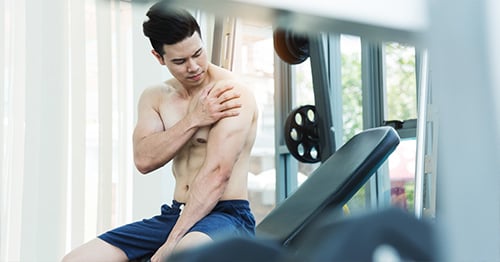
What is the glenoid labrum?
The glenoid labrum is a cup-shaped rim of cartilage that lines and reinforces the ball-and-socket joint of the shoulder. The head of the humerus (upper arm bone) is the "ball," which rests inside the glenoid (“socket"). The glenoid labrum supports and stabilizes the joint, rotator cuff tendons and muscles, and is also the site where various shoulder ligaments attach to the bones.
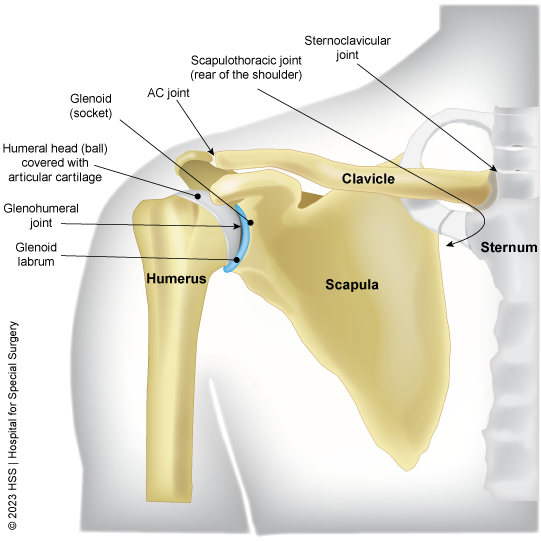
Illustration of the shoulder. The glenoid labrum is shown in blue.
What are the symptoms of a torn glenoid labrum?
Pain and instability at the shoulder are the most common symptoms. These are sometimes accompanied by a popping, catching or grinding sensation. A torn glenoid labrum can also lead to a dislocated shoulder. Precise symptoms, however, vary depending on which type of glenoid labrum tear a patient has.
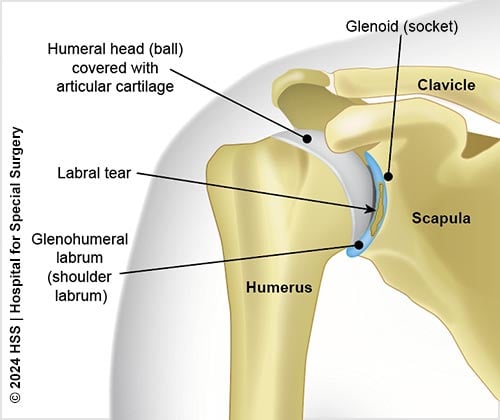
Illustration of the shoulder with a glenoid labral tear.
Glenoid labrum tear types
SLAP tears and Bankart tears are the most common types. Both types are often associated with dull shoulder pain aching pain problems with moving the shoulder normally. SLAP stands for "superior labrum from anterior to posterior." This type of labral tear occurs where the labrum connects to the biceps tendon. In a Bankart tear, a dislocated shoulder causes the head of the humerus to tear the labrum as it pops out of the socket. The tear usually occurs at the front of the shoulder, but it can sometimes occur toward the back.
Do you need surgery for a glenoid labrum tear?
Not always. Some tears can heal with rest and physical therapy. Conservative, nonsurgical options are usually explored first. A sports medicine physician or orthopedic surgeon will do a physical exam and order imaging (X-rays and, often, an MRI) to identify the type of tear and extent of the damage.
Nonsurgical treatment
With rest and physical therapy, some minor glenoid labral tears may heel sufficiently in people who do not plan to engage in competitive athletics or heavy overhead arm motion. In a minor Bankart tear with a dislocation, it may be possible to pop the shoulder back into place and follow up with physical therapy. Conservative treatments include rest, nonsteroidal anti-inflammatory medications (NSAIDs) and, in some cases, a cortisone shot.
In general, nonsurgical treatment is usually most appropriate for older people who do not engage in rigorous physical activity.
When is surgery necessary?
Surgery is typically required for athletes and other active people, such as those whose jobs involve overhead lifting. Surgery to repair torn ligaments and reattach the labrum to the bone may also be necessary if a tear worsen, physical therapy isn't helping, a person can't perform overhead motions, or if they experience recurrent shoulder dislocations.
How is a glenoid labrum repaired?
Depending on the type and severity of the tear, the labrum and ligaments may need to be reattached to the bone using sutures and anchors. This can often be performed arthroscopically, which facilitates the use of minimally invasive incisions to reduce recovery time.
Key takeaways
- The glenoid labrum is a cup-shaped cartilage rim that lines and stabilizes the shoulder's ball-and-socket joint. It also supports the rotator cuff and serves as an attachment point for shoulder ligaments.
- Many glenoid labrum tears can be treated without surgery, especially in older, less active people. Surgical treatment may be necessary for persistent symptoms, recurrent dislocated shoulder, or in athletes and other physically active people.
- When surgery is necessary, the torn labrum is often repaired arthroscopically by reattaching it to the bone with sutures and anchors, allowing for a minimally invasive approach.
In the news
- Revolutionizing Rehab: High-Tech Golf Simulator at HSS Florida Helps Injured Golfers Get Back in the Game Safely
- Masataka Yoshida won’t return to Red Sox until he can throw pain free
- Orthopedic Surgeon Discusses Recovery, Injury Issues For Seattle Mariners' Victor Robles
- Odds in Browns QB Baker Mayfield's favor to get back to same level after shoulder surgery
- E30: Is it safe to have surgery during COVID? with Dr. Ted Blaine
- Rays’ 1st-round draft pick Bitsko has shoulder surgery
Explore Related Patient Stories
View All Patient Stories
Kevin Neary
New York, NY
Glenoid Labrum Tear
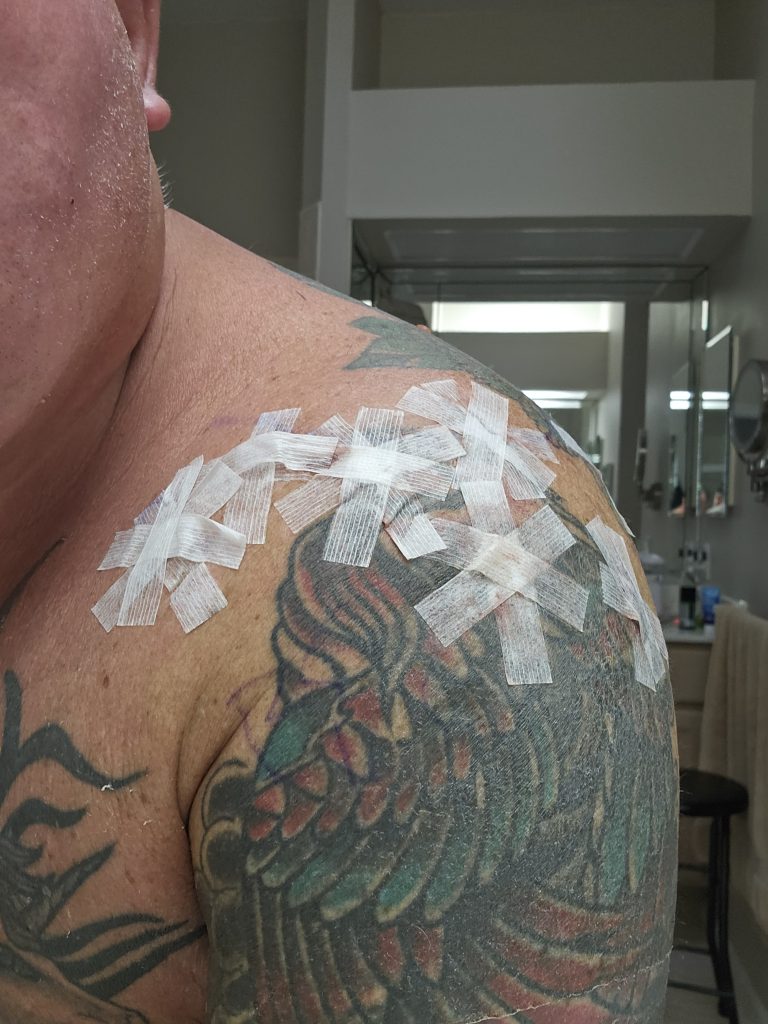
Salvatore Burriesci
Port St. Lucie, FL
Shoulder Arthroscopy
Barney Kenet, MD
New York, NY
Biceps Tendon Rupture/Tear
Jim Giaccone
Bayville, NY
Glenoid Labrum Tear
Timmy Nguyen
Richmond, VA
Rehabilitation
Randy Schindler
Sag Harbor, NY
Glenoid Labrum Tear
Carl Joshua Smith
New York, NY
Shoulder Arthroscopy
Daniel Art
Long Beach, NY
Glenoid Labrum Tear
Richie Prestegaard
Syosset, NY
Glenoid Labrum Tear
Bruce Reed
Long Beach, NY
Glenoid Labrum Tear
Ryan Hanney
Nanuet, NY
Glenoid Labrum Tear
Carrie Craig
Brooklyn, NY
Glenoid Labrum Tear
References
- Eichinger JK, Li X, Cohen SB, Baker CL 3rd, Kelly JD, Dines JS, Tompkins M, Angeline M, Fealy S, Kibler WB. American Shoulder and Elbow Surgeons SLAP/Biceps Anchor Study Group evidence review: pathoanatomy and diagnosis in clinically significant labral injuries. J Shoulder Elbow Surg. 2023 May;32(5):e179-e190. doi: 10.1016/j.jse.2022.12.015. Epub 2023 Jan 19. PMID: 36681106. https://pubmed.ncbi.nlm.nih.gov/36681106/
- Zhang JY, Fabricant PD, Ishmael CR, Wang JC, Petrigliano FA, Jones KJ. Utilization of Platelet-Rich Plasma for Musculoskeletal Injuries: An Analysis of Current Treatment Trends in the United States. Orthop J Sports Med. 2016 Dec 21;4(12):2325967116676241. doi: 10.1177/2325967116676241. PMID: 28210648; PMCID: PMC5302101. https://pubmed.ncbi.nlm.nih.gov/28210648/