Advice to improve your movement, fitness, and overall health from the #1 in orthopedics in the U.S.
How to Stay Strong in Midlife and Beyond
How can you stay strong as you age? Learn how strength training, recovery and a balanced exercise routine can support healthy aging.
Advice to improve your movement, fitness, and overall health from the #1 in orthopedics in the U.S.
For many people, midlife brings changes that are hard to ignore. You can’t work out at the same intensity as before. You start to notice more aches and pains. And staying strong can feel like it takes more effort than it used to.
But those changes are not a signal to slow down. In fact, midlife is a crucial time to invest in your strength, mobility and physical capacity to support healthy aging.
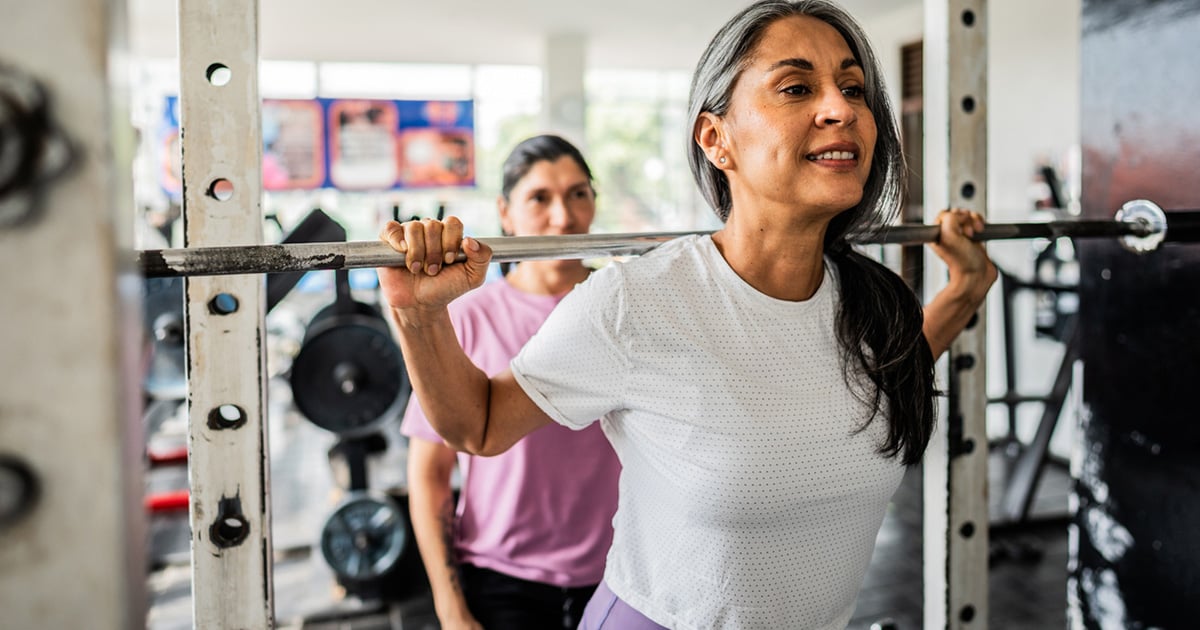
Deirdre Rodericks, MD, a spine and sports medicine physiatrist at HSS, says a smart approach to exercise can help people maintain function over time. “It’s never too late,” she says. “Just build up from where you are.”
What Happens to Muscle as You Age?
Muscle mass generally peaks between ages 25 and 35, then gradually tapers through midlife, says Dr. Rodericks. After age 50, muscle loss may occur at a rate of about 1% to 2% per year, while declines in strength can happen even faster.
That matters for much more than athletic performance. Loss of muscle mass is associated with falls, fractures and physical disability, all of which can threaten a person’s ability to remain independent as they grow older.
The goal during midlife, Dr. Rodericks explains, is to preserve as much strength as possible.
“Your goal in early life and the beginning of midlife is, can we maximize the peak so that we’re starting off as high as possible, and then maintain that peak so we’re not dropping down too quickly as we enter our older years?” she says.
Why Strength Training Becomes More Important in Midlife
For long-term muscular health, Dr. Rodericks recommends resistance training two to three times per week, generally targeting the major muscle groups (legs and glutes, arms and shoulders, and core). The appropriate weight and intensity will vary depending on your health, experience and goals.
For many of the patients she sees, two areas deserve particular attention: the core (including your abs and back muscles) and glutes.
“These muscles are the basis for most functional movements and athleticism,” she says. Whether someone is relatively inactive or a high-level athlete, core and glute strength can play a role in how the body moves and manages load.
Dr. Rodericks points to exercises such as modified curl-ups, bird dogs and side planks as examples of core work. Glute bridges, curtsy lunges and side lunges can help target the gluteal muscles.
Strong Bones Matter, Too
Retaining muscle is only one part of healthy aging. Bone mass also changes over time.
Peak bone mass is typically reached much earlier in life, in the 20s, and then declines later, Dr. Rodericks says. For women, bone loss can accelerate around menopause.
Both weight-bearing exercise—which includes anything that supports the weight of the body, including walking and running—and resistance training can improve bone health. Nutrition matters as well, including getting enough calcium and vitamin D. Some medications and hormonal changes can also affect bone health, so individual risks are important to discuss with a healthcare provider.
People who have osteoporosis may need additional guidance when starting or changing an exercise program. Dr. Rodericks recommends paying particular attention to proper form and, when appropriate, working with a qualified professional, especially when performing unfamiliar strength exercises that may place additional stress on the spine.
Don’t Try to Pick Up Where You Left Off
One of the most common mistakes Dr. Rodericks sees people make in midlife is returning to an activity after a long break and expecting to perform at the same level as before.
Her advice is simple: Start from where you are today, not where you were five or 10 years ago.
Rather than immediately returning to an old weight, pace or intensity, start slower and build progressively. As your strength improves, gradually increase your effort and keep your focus on good form.
Dr. Rodericks recommends stopping an activity before you’re too fatigued to do another repetition or run another sprint, rather than exercising until your form breaks down. “The goal [is] to complete your last rep with maintenance of form to prevent your injury,” she says.
Recovery Is Part of Getting Stronger
Training is only half of the equation. The body also needs time and space to recover. And recovery may become increasingly important with age because the body’s healing processes change over time, Dr. Rodericks says.
Recovery includes sleep, nutrition, hydration and adequate rest. Stress, illness and fatigue can affect all those factors as well.
“Your body does not get stronger during a workout,” Dr. Rodericks says. “It gets stronger while recovering from a workout.”
That makes rest days more than simply time off, but part of the training process.
Dr. Rodericks also cautions against pushing through an injury simply to stick to a workout schedule. Doing so may lead to a longer period away from activity than taking appropriate rest when the body needs it.
Build a Well-Rounded Exercise Routine
Healthy aging requires more than strength alone. Dr. Rodericks encourages people to think about a combination of:
- Resistance training, or using your muscles to work against an external force (weights, kettlebells, resistance bands, etc.)
- Aerobic activity to increase your heart rate
- Balance exercises
- Weight-bearing and impact activity, like walking or running, when appropriate
- Mobility work, such as stretching
- Recovery
There is no single ideal weekly schedule for everyone. Someone who exercises frequently might alternate upper-body strength, lower-body strength and cardiovascular exercise, for example, while incorporating recovery or mobility-focused days. The right mix depends on your current fitness, interests, health and goals.
Finding activities you actually enjoy can also make consistency easier. Dr. Rodericks highlights Tai Chi as one option that can incorporate whole-body movement and balance and can work for people with a range of abilities.
Consistency Beats Perfection
Perhaps the most practical advice for exercising in midlife is also the simplest: avoid an all-or-nothing mindset.
A missed workout does not mean the week is lost. A setback does not mean you have to abandon a goal. And returning to exercise does not require immediately doing everything at once.
“Consistency over perfection is important,” Dr. Rodericks says. “If you can’t do the workout you intended to, it doesn’t mean you can’t do anything.”
Her recommendation is to make small, attainable changes, seek help when needed and progress safely over time.
And for someone who has reached their 50s, 60s or later without establishing a regular exercise routine, the opportunity has not passed.
“It’s never too late,” says Dr. Rodericks. “Even if you fall off for a while, come back to it. Start rebuilding again.”
When to See a Doctor
Some changes in the body should not simply be attributed to getting older. Dr. Rodericks recommends seeking medical care for weakness that comes on suddenly or in one specific area, as well as for any neurological symptoms such as changes in sensation, vision or speech. Pain that limits function or does not improve with a short period of rest should also be evaluated.
For people with existing health conditions, injuries or osteoporosis, individualized medical and exercise guidance may be especially important before changing or starting an exercise routine.
Key Takeaways
- Muscle mass and strength naturally decline with age, making midlife an important time to build and maintain both.
- Strength training is one of the most important tools for healthy aging, supporting muscle and bone health and everyday function.
- Core and glute strength matter at every activity level because they support many functional and athletic movements.
- Progress gradually. Increasing exercise too quickly or sacrificing form can raise the risk of injury.
- Recovery is part of training. Sleep, nutrition, hydration, stress and fatigue all affect the body’s ability to recover.
- Consistency matters more than perfection. Small, sustainable changes can add up over time.
Published 11/6/2026
About the Expert

Dr. Rodericks is a double board certified physiatrist at HSS specializing in the non-operative treatment of musculoskeletal issues, including the spine, shoulder, elbow, wrist, hand, hip, knee, ankle, and foot.