

Advice to improve your movement, fitness, and overall health from the #1 in orthopedics in the U.S.
Mini Band Exercises for Runners: 7 Moves to Improve Strength and Form
Build better running form with these 7 mini band exercises for runners. Target the hips, glutes, and core to improve stability, stride mechanics, and power.
Advice to improve your movement, fitness, and overall health from the #1 in orthopedics in the U.S.
Mini band exercises are a simple and effective way for runners to build the strength, stability, and control needed for efficient movement. This series targets the hip flexors, glutes, hip stabilizers, and postural muscles that help support strong knee drive, powerful push-off, steady single-leg balance, and good alignment through the hip, knee, and ankle with each stride. By training these single leg and postural movements with control, runners can improve stride mechanics, maintain a more upright posture, keep the chest open and shoulders relaxed, and reduce excessive collapse or compensation during running. Perform these exercises 2-3 times a week as part of a larger strength training routine or an add on to your running workout.

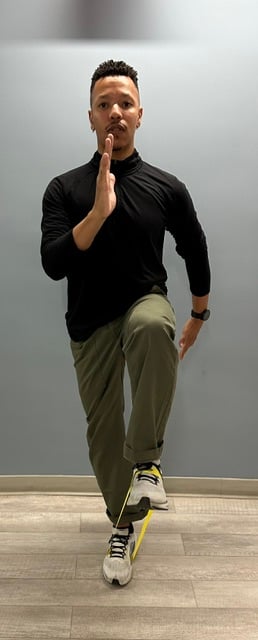
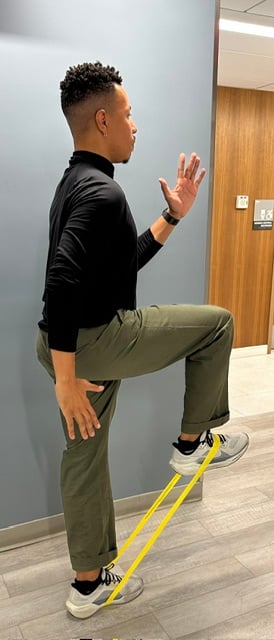
Banded Knee Drive with Mini Loop Band
Aim for 3 sets x 10 repetitions per side.
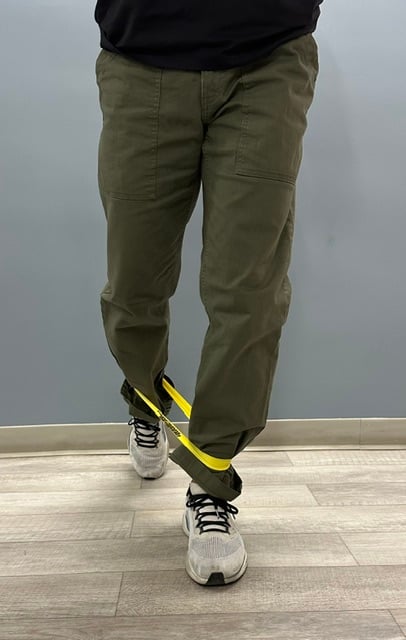
- Place a mini loop band around both feet and stand tall with your feet hip-width apart.
- Shift your weight onto one leg while keeping your standing foot grounded and your posture upright.
- Drive the opposite knee up toward hip height, pulling against the band while keeping your toes pulled up.
- Pause briefly at the top, then slowly lower the foot back to the starting position with control.
- Keep your hips level, core engaged, and standing knee slightly soft throughout the movement.
- Perform the movement smoothly—avoid leaning back, rushing, or letting the band snap your foot down.
- Complete the prescribed reps on one side, then switch legs.
- A good exercise for runners because it strengthens hip flexion and trains upright posture, single-leg stability, and controlled knee-drive mechanics needed for efficient, powerful running.
Diagonal Hip Extension with Mini Loop Band
Aim for 3 sets x 12 repetitions per side.
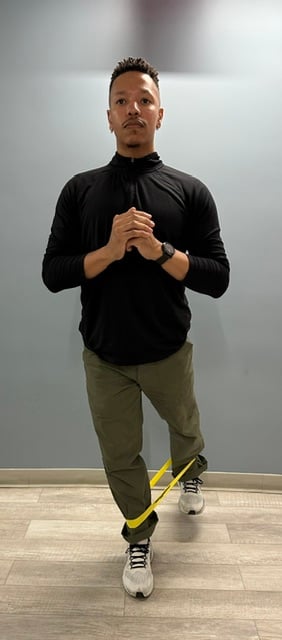
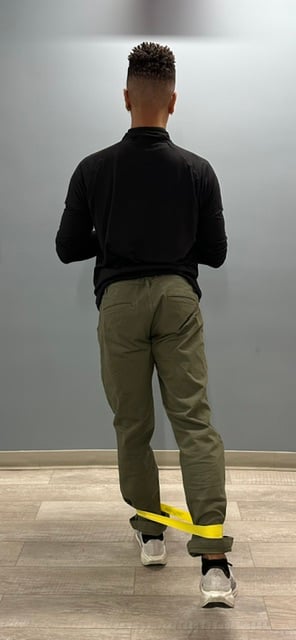
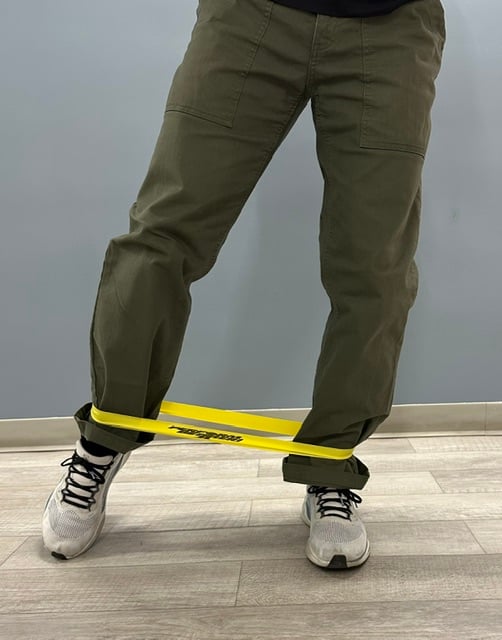
- Place a mini loop band around both ankles and stand tall with your feet hip-width apart.
- Shift your weight onto one leg while keeping your hips level, core engaged, and standing knee slightly soft.
- Reach the opposite heel back and slightly out on a diagonal, keeping the leg straight, and pressing into the tension of the band without arching your low back.
- Keep your toes facing forward and focus on squeezing through the glute of the moving leg.
- Pause briefly at the end of the motion, then slowly return to the starting position with control.
- Avoid leaning forward, rotating your hips, or letting the band pull your leg back in quickly.
- Complete the prescribed reps on one side, then switch legs.
- A good exercise for runners because it strengthens the glutes and hip stabilizers needed to improve push-off power, control hip alignment, and maintain efficient single-leg mechanics with each stride.
Hip Clock / Star Excursion with Mini Loop Band
Aim for 3 sets x 4 rounds (front, side, back) per side.
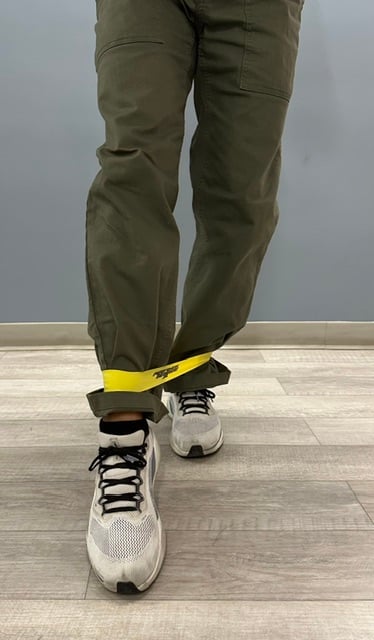
- Place a mini loop band around both ankles and stand tall with your feet hip-width apart.
- Shift your weight onto one leg, keeping your hips level, core engaged, and standing knee slightly soft.
- Lightly tap the opposite foot forward, out to the side, and back on a diagonal, as if reaching to different points on a clock.
- Keep most of your weight on the standing leg and use the moving leg as a light tap rather than a full step.
- Move slowly and with control, keeping your toes facing forward and avoiding hip rotation.
- Return to the starting position between each tap while maintaining balance and steady posture.
- Complete the prescribed pattern or reps on one side, then switch legs.
- A good exercise for runners because it builds single-leg balance, hip stability, and controlled multi-directional movement, helps improve stride control and reduce excessive hip, knee, or ankle collapse while running.
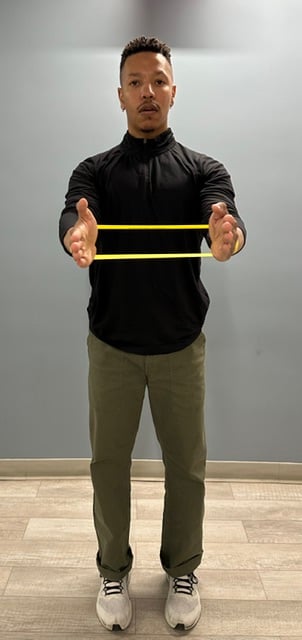
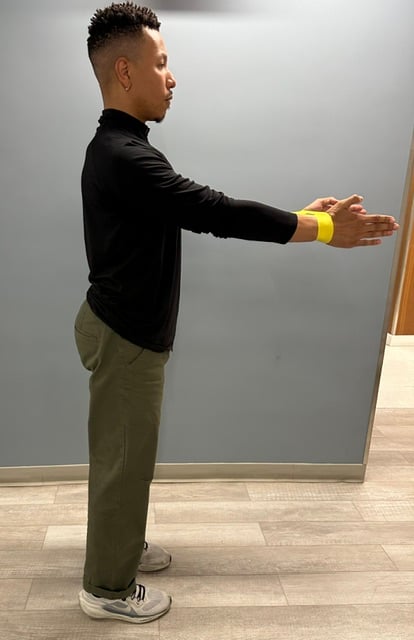
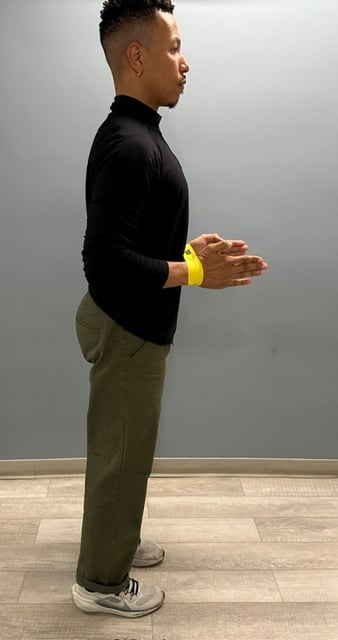
Standing Neutral Double Arm Row with Mini Loop Band
Aim for 3 sets x 12 repetitions.
- Place a mini loop band around both hands and stand tall with your feet hip-width apart.
- Hold your arms straight out in front of you at about chest height with your palms facing each other.
- Keep your shoulders relaxed, core engaged, and ribs stacked over your hips.
- Pull both elbows straight back toward your sides, squeezing your shoulder blades gently together.
- Pause briefly at the end of the row, then slowly return your arms to the starting position with control.
- Avoid shrugging your shoulders, arching your back, or letting the band pull your arms forward quickly.
- Repeat for the prescribed number of reps while maintaining steady posture and smooth breathing.
- A good exercise for runners because it strengthens the upper back and postural muscles needed to keep the chest open, shoulders relaxed, and arm swing efficient during running.
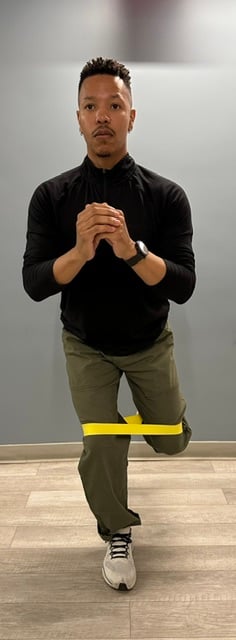
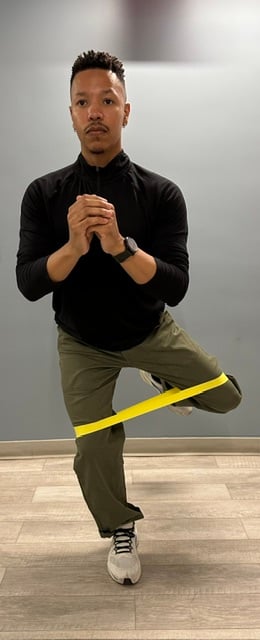
Fire Hydrant / Standing Clamshell with Mini Loop Band
Aim for 3 sets x 12 repetitions per side.
- Place a mini loop band around both thighs, just above your knees, and stand tall with your feet hip-width apart.
- Shift your weight onto one leg while keeping your hips level, core engaged, and standing knee slightly soft.
- Bend the opposite knee slightly, then lift that knee out to the side against the band, like opening a clamshell.
- Avoid rotating your hips or turning your body.
- Pause briefly at the top, then slowly return the knee to the starting position with control.
- Focus on feeling the side of your hip working rather than using momentum.
- Complete the prescribed reps on one side, then switch legs.
- A good exercise for runners because it strengthens the lateral hip muscles that help keep the pelvis stable, control knee alignment, and reduce side-to-side collapse during single-leg stance in running.
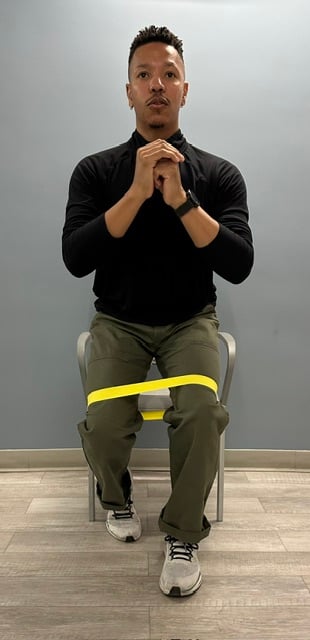
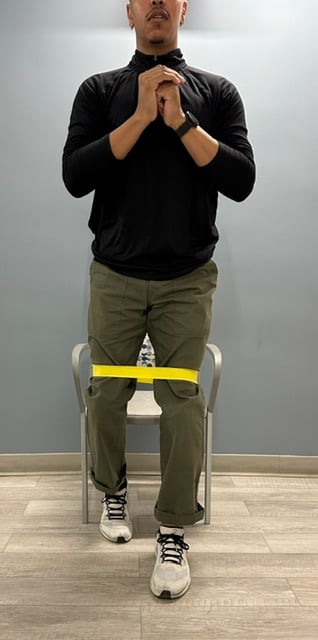
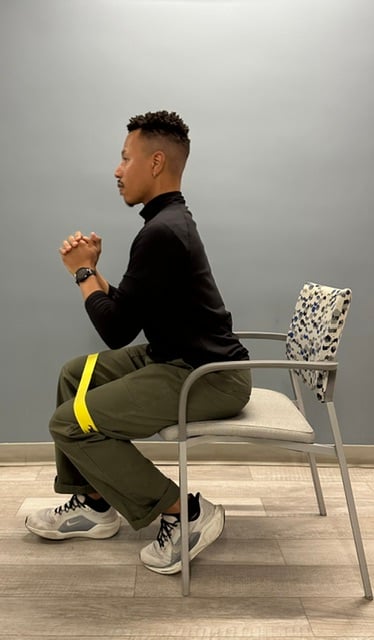
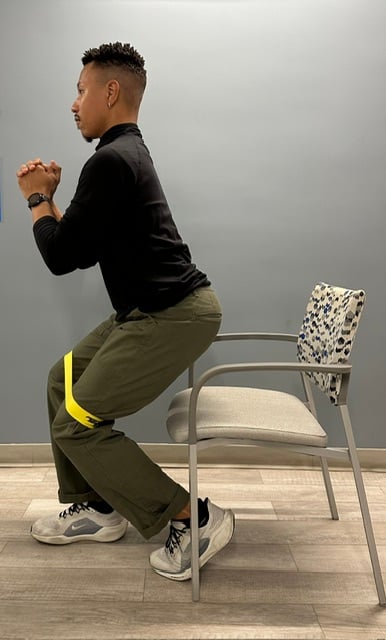
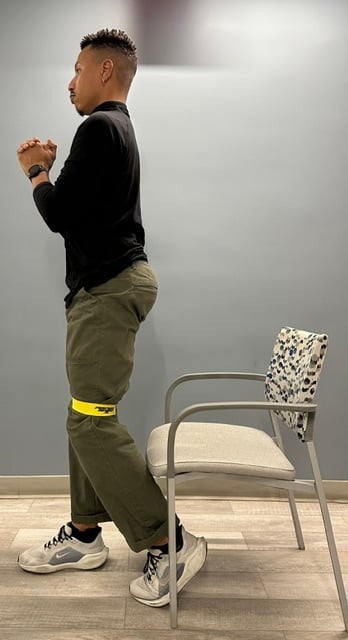
Kickstand Single Leg Sit-to-Stand with Mini Loop Band
Aim for 3 sets x 10 repetitions per side.
- Place a mini loop band around both thighs, just above your knees, and sit near the edge of a chair or bench.
- Plant the front foot firmly on the floor and place the opposite foot slightly behind as a light kickstand for balance.
- Keep your chest tall, core engaged, and knee gently pressing out against the band.
- Drive mostly through the planted leg to stand up, using the kickstand foot only as much as needed for support.
- Pause briefly at the top, then slowly lower back to the chair with control.
- Avoid letting your knee cave inward, pushing too much through the kickstand foot, or dropping quickly into the seat.
- Complete the prescribed reps on one side, then switch legs.
- A good exercise for runners because it strengthens single-leg control, glute and quad strength, and knee alignment needed for stable, efficient loading with each running stride.
The Running Mechanics Analysis at HSS is a full assessment of how you run. It examines flexibility, strength and stability, and, using Dartfish 2-D analysis, it records your gait from all sides. Therapists then analyze the findings and create a plan of how to fix your form and function. You’ll also receive a report highlighting everything discussed, pictures of you running and suggestions on next steps. To learn more, visit Running Gait Analysis | HSS Performance and Wellness.
Published 7/23/2026