
- Loading news articles, please wait.
For all publications, please see the PubMed listing

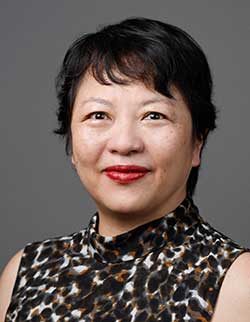
Theresa Lu holds the St. Giles Chair for Research in the HSS Research Institute, is a faculty member in Pediatric Rheumatology and in Rheumatology at HSS, and is Professor of Microbiology and Immunology and Professor Pediatrics at Weill Cornell Medicine. She is also currently Co-Director of the Weill Cornell PhD Program in Immunology and Microbial Pathogenesis. Dr. Lu received her MD and PhD from Yale University, trained in Pediatrics at Children's Hospital of Philadelphia, and completed her fellowship in Pediatric Rheumatology at the University of California San Francisco. She completed her PhD training with Joseph Madri at Yale and her postdoc training with Jason Cyster at UCSF. She has received numerous awards, including the American College of Rheumatology Young Investigator Award, Weill Cornell Teaching and Mentoring Award, and induction into the American Society for Clinical Investigation and the Henry Kunkel Society for immune disease research. Dr. Lu's goal is to better understand and treat lupus and other rheumatic diseases while also supporting the growth and development of the next generation of scientists.
The immune circuit in disease
The Lu Lab studies how the immune system interacts with tissues to limit or promote autoimmune and musculoskeletal diseases. There is a circuitry whereupon injury or infection, the affected tissue sends signals to lymphoid tissues such as lymph nodes, which are the sites of T and B cell activation. T and B cells in lymph nodes may become activated by these signals causing lymph node swelling, and then migrate from the lymph nodes to the affected tissue. There, they may help to control the infection but are also capable of inadvertently causing tissue destruction. In autoimmune and inflammatory diseases such as lupus, tissues such as the skin are more prone to injury to begin with, and there is activation of T and B cells that destroy tissues. We want to better understand the functions of the component parts of this circuitry as well as how the component parts interact to yield health versus disease. For example, we are asking 1) why tissues in disease are more prone to injury and 2) how signals from affected tissues modulate the lymph node microenvironment to regulate the activity of T and B cells.
We address the questions from a number of perspectives, including 1) lymph node vascular-stromal microenvironment that controls T and B cells in autoimmune and musculoskeletal conditions, 2) Langerhans (immune) cell protection of the skin in lupus photosensitivity ( a skin sensitivity to sunlight), 3) lymphatic dysfunction in disease, and 4) the role of immune cells in tissue repair and regeneration in fibrosis.
Our work has the potential to provide more insight into fundamental mechanisms of health and disease and to lead to better treatment of rheumatic and orthopedic conditions.
If you are interested in joining the Lu Lab, please send cover letter, CV, and contacts for 3 references to lut@hss.edu.
Please visit the Theresa Lu Lab page to see our publications and learn more about our lab and our work.
Lupus
Photosensitivity of skin
Lymphatics
Lymph node stromal cells
Fibroblastic reticular cells
Vasculature
Immune cell-tissue interactions
NIH R01 AI079178
DOD W81XWH-22-1-0627
NIH 1R21AR081493
St. Giles Foundation
A Lasting Mark Foundation
Barbara Volcker Center for Women and Rheumatic Diseases

St. Giles Chair for Research and Senior Scientist, HSS Research Institute
Faculty, Division of Pediatric Rheumatology, Department of Medicine, HSS
Professor of Microbiology and Immunology, Department of Microbiology and Immunology, Weill Cornell Medical School
Professor of Pediatrics, Department of Microbiology and Immunology, Weill Cornell Medical School
Co-director, Immunology and Microbial Pathogenesis Graduate Program, Weill Cornell Graduate School
Pediatric Rheumatology
Weill Cornell Graduate School 2010 Dean's Award for Excellence in Teaching and Mentoring 2010
Induction into the American Society for Clinical Investigation 2011
Henry Kunkel Young Investigator Award, American College of Rheumatology 2011
Induction into the Henry Kunkel Society for immune-disease research 2015
St. Giles Chair for Pediatric Research 2020
BS Yale University
MD, PhD Yale University: PhD in the lab of Joseph Madri, PhD,MD
Residency
Pediatrics, Children's Hospital of Philadelphia
Fellowship
Pediatric Rheumatology, University of California, San Francisco
Postdoc in the lab of Jason Cyster, PhD
.
One of the goals of HSS is to advance the science of orthopedic surgery, rheumatology, and related disciplines for the benefit of patients. Research staff at HSS may collaborate with outside companies for education, research and medical advances. HSS supports this collaboration in order to foster medical breakthroughs; however, HSS also believes that these collaborations must be disclosed. As part of the disclosure process, this website lists Research staff collaborations with outside companies if the Research staff member received any payment during the prior year or expects to receive any payment in the next year. The disclosures are based on information provided by the Research staff and other sources and are updated regularly. Current ownership interests and leadership positions are also listed. Further information may be available on individual company websites.
Below are the healthcare industry relationships reported by Dr. Lu as of May 26, 2026.
By disclosing the collaborations of HSS Research staff with industry on this website, HSS and its Research staff make this information available to patients and the public, thus creating a transparent environment for those who are interested in this information. Further, the HSS Conflicts of Interest Policy does not permit payment of royalties on products developed by him/her that are used on patients at HSS. Feel free to ask the Research staff member about their relationship(s).