

- Loading news articles, please wait.
For all publications, please see the PubMed listing

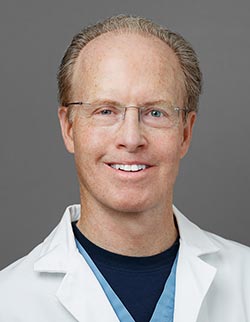
Scott W. Wolfe, M.D., is acknowledged to be one of the most innovative and authoritative experts in orthopedic upper extremity care. He maintains an active clinical practice and teaches medical students, residents, and fellows as a Weill-Cornell Medical School Professor of Orthopedic Surgery. Dr. Wolfe is recognized for his expertise in the disorders and fractures of the wrist and forearm, total wrist replacement, Dupuytren disease, Parsonage Turner Syndrome, tendon repair, nerve repair, and brachial plexus reconstruction. As an educator he has improved the knowledge, skill levels and techniques practiced by today’s most effective hand surgeons.
As Attending Surgeon and Senior Scientist at Hospital for Special Surgery, he’s published over 250 scientific papers throughout his 36-year career in the most respected, peer-reviewed, American and European medical journals. In 2017, Dr. Wolfe was awarded the prestigious Kappa Delta Award for his decades of ground-breaking research on wrist kinematics. His career goals are to achieve consistently superior patient outcomes in hand, wrist, and nerve surgery, while educating others in modern techniques, and pushing the boundaries of hand and wrist research. World class musicians and professional athletes have had their mobility restored through the care of Dr. Wolfe, who has consistently been rated as one of America's and New York’s Top Doctors for over 25 years.
Learn more about Dr. Wolfe on https://www.scottwolfemd.com/
Wrist
Wrist Fractures: Distal Radius and Scaphoid Fractures and Non-Unions
Wrist Replacement
Wrist Instability
Osteoarthritis
SLAC / SNAC Wrist
TFCC Injuries / Tears
Ligament Injuries
Basal Joint / Thumb Arthritis
Kienbock’s Disease
Sports Injuries
Wrist Deformities
Inventor: Innovative New Artificial Wrist
Hand
Carpal Tunnel Syndrome
Cubital Tunnel Syndrome
Guyon's Canal
Peroneal Nerve Disorders
Radial Nerve Disorders
Median Nerve Disorders
Axillary Nerve Repair
Suprascapular Nerve Repair
Musculocutaneous Nerve Repair
Brachial Plexus
Nerve Transfer
Elbow
Biceps Tendon Ruptures
Ulnar Nerve Compression
Elbow Fractures

Sharon, VT
Hand Pain, Injuries and Conditions

New Hope, PA
Hand Pain, Injuries and Conditions

New Milford, CT
Hand Pain, Injuries and Conditions

Atlanta, GA
Hand Pain, Injuries and Conditions

Englewood, NJ
Flatfoot

Greenwich, CT
Hand Pain, Injuries and Conditions

Montclair, NJ
Knee Replacement Surgery

Patchogue, NY
Arthritis
Stamford, CT
Hand Pain, Injuries and Conditions

Rye, NY
Ganglion Cyst

New Canaan, CT
Hand Pain, Injuries and Conditions

Wallkill, NY
Elbow Pain, Conditions and Treatments
Lancaster, PA
Brachial Plexus Injury

Rochester, MA
Hand Pain, Injuries and Conditions

Wallingford, CT
Hamstring Injury

Hackensack, NJ
Hand Arthritis and Arthritis of the Fingers

New York, NY
Dupuytren's Contracture
New Canaan, CT
Arthritis of the Thumb

Massapequa, NY
Hand Pain, Injuries and Conditions

Sydney, New South Wales, Australia
Broken Wrist (Wrist Fracture)
If your insurance is not listed, please call our office if you have questions regarding your insurance coverage. If you have out-of-network benefits, then your insurance may reimburse you for a portion of your office visit.
Attending Orthopedic Surgeon, Hospital for Special Surgery
Professor of Orthopedic Surgery, Hand Surgery and Nerve Repair, Weill Cornell Medical College
Attending Orthopedic Surgeon, NewYork-Presbyterian Hospital
Faculty Director of Orthopedic Surgery, Hospital for Special Surgery
Member, Executive Council, Hospital for Special Surgery
Senior Scientist, Research Division, Hospital for Special Surgery
President, New York Society for Surgery of the Hand
President, New York Society for Surgery of the Hand, 2014
Omicron Delta Kappa, Johns Hopkins University, 1997
Phi Beta Kappa, Johns Hopkins University, 1980
Castle Connolly Top Doctor - 20 Years
Castle Connolly America's Top Doctors, 2002-2020
Castle Connolly Top Doctors in New York Metro Area, 2003-2022
New York Magazine Top Doctors, 2002-2022
American Society for Surgery of the Hand Linscheid-Dobyns Excellence in Wrist Research Award, 2018
Kappa Delta Elizabeth Winston Lanier Award, AAOS, 2017
Fellowship Grant, Orthopedic Research and Education Foundation, 2010-2011
Patients' Choice Award, New York Physicians, Vitals, 2008-2010
'Most Compassionate Physician's List', 2009
Best Papers, American Society for Surgery of the Hand,2009
2nd Prize, New York Society for Surgery of the Hand, Residents and Fellows Night, 2009
Emanuel Kaplan Award, New York Society for Surgery of the Hand, 2009
Philip D. Wilson Award, Hospital for Special Surgery, 2008
1st Prize, New York Society for Surgery of the Hand, Residents and Fellows Night, 2008
OREF Residents Award, 2nd Prize, Andrew Swanson, 2008
First Place Award, 3rd Annual Bioengineering Expo, Institute for Biological Engineering, 2005
Best Scientific Exhibit, American Society for Surgery of the Hand,2001
Sterling Bunnell Traveling Fellowship, American Society for Surgery of the Hand, 1997-98
The Wayne O. Southwick Teaching Award, Yale Department of Orthopaedics and Rehabilitation, 1996
The Wayne O. Southwick Teaching Award, Yale Department of Orthopaedics and Rehabilitation, 1992
The T. Campbell Thompson Award for Orthopaedic Excellence, Hospital for Special SurgeryandWeill Cornell Medical College1984
Dean's Research Prize for Orthopaedic Research, Weill Cornell Medical College, 1984
Medical:Cornell University Medical College, 1984
Residency:Roosevelt Hospital General Surgery, US, 1984-85
Hospital for Special Surgery, New York, US, 1986-89
Fellowship:New York Orthopaedic Hospital, The Annie C. Kane Hand and Microsurgical Fellow, US
Columbia-Presbyterian Medical Center, US
New York, Connecticut
Editor, Green's Operative Hand Surgery
The eight small bones of the carpus exhibit complex but coordinated motions during wrist flexion-extension and radioulnar deviation. Small perturbations in these coordinated motions, such as might be caused by fracture or ligament injury, can result in changes in joint loading and progressive carpal collapse and degenerative arthritis. Previous techniques to study carpal motion have been limited by the need to place invasive markers. We developed a technique using high resolution computed tomography to accurately identify and reconstruct surface contours and analyze rotation and translation of each bone throughout all planes of wrist motion. We have identified a plane of motion that requires almost no contribution from the proximal carpal row, and propose that this so-called 'dart-throwers' plane may represent the functional plane of wrist motion and may have evolutionary significance.
Dr. Wolfe is a principal investigator for these patient registries .
HSS has a long history of supporting appropriate relationships with industry because they advance HSS's mission to provide the highest quality patient care, improve patient mobility, and enhance the quality of life for all, and to advance the science of orthopedic surgery, rheumatology, and their related disciplines through research and education.
Below are the healthcare industry relationships reported by Dr. Wolfe as of December 4, 2025.
HSS and its physicians make this information available to patients and the public, thus creating a transparent environment for those who are interested in this information. Further, the HSS Conflicts of Interest and Commitment Policy prohibits physicians from collecting royalties on products they develop that are used on patients at HSS. Patients should feel free to ask their HSS physicians questions about these relationships.