


About Dr. Rodeo
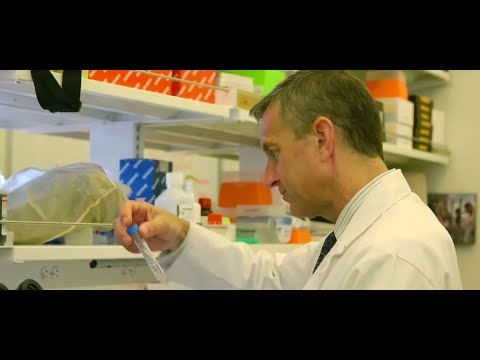
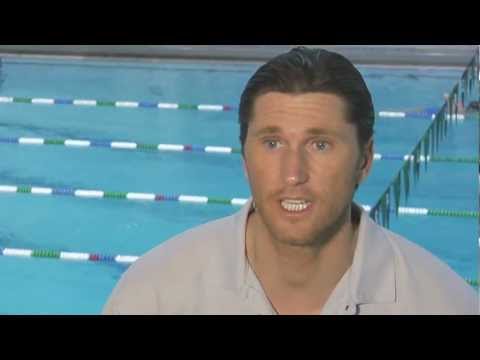
Dr. Scott Rodeo is Professor of Orthopaedic Surgery at Weill Medical College of Cornell University and is an Attending Surgeon at the New York-Presbyterian Hospital and Hospital for Special Surgery, where he is Co-Chief Emeritus of the Sports Medicine and Shoulder Service, Vice Chair of Orthopaedic Research, and Co-Director of the Orthopaedic Soft Tissue Research Program. He also serves as Director of the Center for Regenerative Medicine at Hospital for Special Surgery. Rodeo is Head Team Physician for the New York Giants Football Team, and he served as a Team Physician for the United States Olympic Team in 2004, 2008, 2012, and 2016. His clinical practice involves orthopaedic sports medicine, with specialty interest in complex knee reconstruction (ligament, meniscus and cartilage surgery), tendon repair in the shoulder and other joints, and shoulder instability. He runs a translational research laboratory program investigating the cellular and molecular mechanisms of soft tissue repair. Rodeo graduated cum laude from Stanford University, where he completed his undergraduate work while competing on the Stanford Swimming Team. He completed medical school graduating with honors from Cornell University Medical College.
Special Expertise
Complex knee reconstruction (ligament, meniscus and cartilage surgery)
Tendon repair in the shoulder and other joints, and shoulder instability
Explore Related Patient Stories
View All Patient Stories
Theo Johnson
East Rutherford, NJ
Jones Fractures of the Foot

Richard Boukas
Kew Gardens Hills, NY
Shoulder Replacement Surgery
Xavier McKinney
Roswell, GA
Hand Pain, Injuries and Conditions

Mike Kluger
Brooklyn, NY
Knee Pain Causes, Conditions and Treatments

Alex Bobocea
Queens, NY
ACL Tear (Torn ACL)
Thomas Ciasullo
Ogdensburg, NJ
ACL Tear (Torn ACL)

Nick Gates
Las Vegas, NV
Broken Leg (Leg Fracture)

Lorenzo Carter
Atlanta, GA
Achilles Tendon Pain

Tara Rempel
Spring Lake, NJ

Thomas Foley
mahopac, NY
Knee Pain Causes, Conditions and Treatments

Jared Baumeister
New York, NY
ACL Tear (Torn ACL)

Lowell Graham
El Paso, TX
Shoulder Pain

Donna Goettler
Wallingford, CT
Hamstring Injury

Steven Gluckstein
Atlantic Highlands, NJ
Knee Pain Causes, Conditions and Treatments

Lance Fischer
Andover Twp., NJ
ACL Tear (Torn ACL)

Gina Lepore
Darien, CT

Serena Spence
Port Jefferson Station, NY
Knee Pain Causes, Conditions and Treatments
Emily Wiser
Cincinnati, OH
Meniscus Tear (Torn Meniscus)
Wilfredo Rivera
New York, NY
Shoulder Replacement Surgery
Ruth Cowan
Springfield, NJ
Knee Replacement Surgery
Videos
Patient ratings for Dr. Rodeo
Insurance
If your insurance is not listed, please call our office if you have questions regarding your insurance coverage. If you have out-of-network benefits, then your insurance may reimburse you for a portion of your office visit.
Credentials
Appointments
Co-Chief Emeritus, Sports Medicine and Shoulder Service, Hospital for Special Surgery
Professor of Orthopaedic Surgery (Academic Track), Weill Medical College of Cornell University
Attending Orthopaedic Surgeon, Hospital for Special Surgery
Attending Surgeon (Orthopaedic Surgery), The New York-Presbyterian Hospital
Senior Scientist, Department of Research, Hospital for Special Surgery
Co-Director, Orthopaedic Soft Tissue Research Program, Hospital for Special Surgery
Vice Chair of Orthopaedic Research, Hospital for Special Surgery
Director, Regenerative Medicine Center, Hospital for Special Surgery
Head Team Physician, New York Giants Football
Affiliations
American Orthopaedic Society for Sports Medicine
Orthopaedic Research Society
American Shoulder and Elbow Surgeons
Biologics Association
Arthroscopy Association of North America
New York Giants Football
Certifications
American Board of Orthopaedic SurgeryAwards
Jerry 'Hawk' Rhea Award for Outstanding NFL Team Physician (NY Giants), Professional Football Athletic Trainers Society (PFATS), 2024
Castle Connolly Top Doctor, 15 Years
Castle Connolly America's Top Doctors, 2008-2020
Castle Connolly Top Doctors in New York Metro Area, 2008-2022
New York Magazine Top Doctors, 2007-2022
Excellence in Research Award, American Orthopaedic Society for Sports Medicine, 2004
Finalist, New Investigator's Recognition Award, Orthopaedic Research Society, 1997
Winner 3M Basic Science Award, American Orthopaedic Society for Sports Medicine, 1996
Lewis Clark Wagner Award for Resident Research,Hospital for Special Surgery, 1994
Winner, American Orthopaedic Association-Zimmer Resident Research Travel Award, 1992
Education
Hospital for Special Surgery, New York, NY
Fellow, Department of Sports Medicine, August 1995-July 1996
Hospital for Special Surgery, New York, NY
Fellow, Laboratory for Soft Tissue Research, August 1994-July 1995
Hospital for Special Surgery, New York, NY
Residency, Orthopaedic Surgery, July 1990-June 1994
New York Hospital, New York, NY
Internship, General Surgery, July 1989-June 1990
Cornell University Medical College, New York, NY M.D., with Honors in Research, September 1985-May 1989
Stanford University 1981- 1985
State Licensure
New York, New Jersey, Connecticut
Languages
EnglishFor My Patients
Patient Forms
Publications by Dr. Rodeo
Patient Education
Selected Journal Articles
Rodeo SA. Why Do Tendons Hurt? Lessons from the Study of Calcific Tendinitis: Commentary on Hackett L et al. 'Are the Symptoms of Calcific Tendinitis Due to Neoinnervation and/or Neovascularization?'. J Bone Joint Surg Am. 2016 Feb 3;98(3):e13. doi: 10.2106/JBJS.O.00969.
Wang H, Koff MF, Potter HG, Warren RF, Rodeo SA, Maher SA. An MRI-compatible loading device to assess knee joint cartilage deformation: Effect of preloading and inter-test repeatability. J Biomech. 2015 Sep 18;48(12):2934-40. doi: 10.1016/j.jbiomech.2015.08.006. Epub 2015 Aug 13.
Ma R, Ju X, Deng X, Rodeo S. A novel small animal model of differential anterior cruciate ligament reconstruction graft strain. Journal of Knee Surgery 2015; 28: 489-495.
Rodeo SA, Voigt C, Ma R, Solic J, Stasiak M, Ju X, El-Amin S, Deng X. Use of a New Model Allowing Controlled Uniaxial Loading to Evaluate Tendon Healing in a Bone Tunnel. J Orthop Res. 2015 Oct 28. doi: 10.1002/jor.23087.
Carbone A, Carballo C, Ma R, Wang H, Deng X, Dahia C, Rodeo S. Indian hedgehog signaling and the role of graft tension in tendon-to-bone healing: Evaluation in a rat ACL reconstruction model. J Orthop Res. 2015 Oct 8. doi: 10.1002/jor.23066. [Epub ahead of print]
Rodeo SA, Lebaschi A, Carballo C, Zong J, Khilnani T, Cunningham M, Lane J, Maher S. Specialty Update: What's New in Orthopaedic Research 2015. J Bone Joint Surg Am. 2015 Dec 2;97(23):1972-8. doi: 10.2106/JBJS.O.00958.
Atesok K, Fu F, Sekiya I, Stolzing A, Ochi M, Rodeo SA. Stem cells in degenerative orthopaedic pathologies: effects of aging on therapeutic potential. Knee Surg Sports Traumatol Arthroscopy, DOI 10.1007/s00167-015-3763-9.
Munch J, Voigt M, Green D, Rodeo S. Surgical techniques for treatment of symptomatic discoid meniscus. In Cordasco F and Green D (eds): Pediatric and Adolescent Knee Surgery, Wolters Kluwer, Philadelphia, 2015, p. 236-242.
Fowler D, Voigt M, Rodeo S. Meniscal allograft transplantation. In Cordasco F and Green D (eds): Pediatric and Adolescent Knee Surgery, Wolters Kluwer, Philadelphia, 2015, p. 243-254.
Sneag DB, Shah P, Koff MF, Lim WY, Rodeo SA, Potter HG. Quantitative Ultrashort Echo Time Magnetic Resonance Imaging Evaluation of Postoperative Menisci: a Pilot Study. HSS J. 2015 Jul;11(2):123-9. doi: 10.1007/s11420-014-9420-x. Epub 2014 Nov 18.
McCarthy M, Voigt M, Rodeo S. Is meniscus allograft transplantation chondroprotective? In Getgood A, Spalding T, Cole B, Gersoff W, Verdonk P (eds): Meniscal Allograft Transplantation: A Comprehensive Review, DJO Publications, Surrey, UK, 2015, p. 123-134.
Grawe B and Rodeo S. The role of biologics in meniscus allograft transplantation. In Getgood A, Spalding T, Cole B, Gersoff W, Verdonk P (eds): Meniscal Allograft Transplantation: A Comprehensive Review, DJO Publications, Surrey, UK, 2015, p. 167-176.
Galatz LM, Gerstenfeld L, Heber-Katz E, Rodeo SA. Tendon regeneration and scar formation: The concept of scarless healing. J Orthop Res. 2015 Jun;33(6):823-31. doi: 10.1002/jor.22853. Epub 2015 Apr 27.
Weber AE, Delos D, Oltean HN, Vadasdi K, Cavanaugh J, Potter HG, and Rodeo SA. Tibial and femoral tunnel changes after ACL reconstruction: A prospective 2-year longitudinal MRI study. American J. Sports Medicine 2015; 43:1147-1156.
Kovacevic D, Gulotta LV, Ying L, Ehteshami JR, Deng XH, Rodeo SA. rhPDGF-BB Promotes Early Healing in a Rat Rotator Cuff Repair Model. Clin Orthop Relat Res. 2015 May;473(5):1644-54. doi: 10.1007/s11999-014-4020-0.
Warme B and Rodeo SA. Multidirectional shoulder instability. In Reider B, Davies G, and Provencher M (eds): Elsevier Saunders, Philadelphia, 2015, p. 91-94.
Hutchinson ID, Rodeo SA, Perrone GS, Murray MM. Can platelet-rich plasma enhance anterior cruciate ligament and meniscal repair? J Knee Surg 2015; 28:19–28.
Rodeo SA, Sugiguchi F, Fortier LA, Cunningham ME, Maher S. What's New in Orthopaedic Research. J Bone Joint Surg Am. 2014; 96:2015-2019.
Lee CH, Rodeo SA, Fortier LA, Lu C, Erisken C, Mao JJ. Protein-releasing polymeric scaffolds induce fibrochondrocytic differentiation of endogenous cells for knee meniscus regeneration in sheep. Sci. Transl. Med. 2014; 6: 266ra171.
Atesok K, Doral MN, Karlsson J, Egol KA, Jazrawi LM, Coelho PG, Martinez A, Matsumoto T, Owens BD, Ochi M, Hurwitz SR, Atala A, Fu FH, Lu HH, Rodeo SA. Multilayer scaffolds in orthopaedic tissue engineering. Knee Surg Sports Traumatol Arthrosc. 2014 Dec 3. [Epub ahead of print].
Wang H, Gee A, Hutchinson I, Stoner K, Warren R, Rodeo S, Maher S. Altered regional loading patterns on articular cartilage following meniscectomy are not fully restored by autograft meniscal transplantation. Osteoarthritis Cartilage. 2014 Dec 9. pii: S1063-4584(14)01365-X. doi: 10.1016/j.joca.2014.12.003.
Hettrich CM, Gasinu S, Beamer BS, Stasiak M, Fox A, Birmingham P, Ying O, Deng XH, Rodeo SA. The effect of mechanical load on tendon-to-bone healing in a rat model. Am J Sports Med. 2014 May;42(5):1233-41. doi: 10.1177/0363546514526138. Epub 2014 Apr 1.
Codsi MJ, Rodeo SA, Scalise JJ, Moorehead TM, Ma CB. Assessment of rotator cuff repair integrity using ultrasound and magnetic resonance imaging in a multicenter study. J Shoulder Elbow Surg. 2014 Oct;23(10):1468-72. doi: 10.1016/j.jse.2014.01.045. Epub 2014 Apr 18.
Wang H, Chen T, Koff MF, Hutchinson ID, Gilbert S, Choi D, Warren RF, Rodeo SA, Maher SA. Image based weighted center of proximity versus directly measured knee contact location during simulated gait. J Biomech. 2014 Jul 18;47(10):2483-9. doi: 10.1016/j.jbiomech.2014.04.010. Epub 2014 Apr 16.
Delos D, Leineweber M, Chaudhury S, Alzoobaee S, Gao Y, Rodeo S. The effect of platelet-rich plasma on muscle contusion healing in a rat model. Am J Sports Med. 2014 Sep;42(9):2067-74. doi: 10.1177/0363546514540272.
Fox AJ, Schär MO, Wanivenhaus F, Chen T, Attia E, Binder NB, Otero M, Gilbert SL, Nguyen JT, Chaudhury S, Warren RF, Rodeo SA. Fluoroquinolones impair tendon healing in a rat rotator cuff repair model: A preliminary study. Am J Sports Med. 2014; 42: 2851-2859.
Hutchinson I, Moran C, Potter H, Warren R, Rodeo S. Restoration of the meniscus: form and function. The American Journal of Sports Medicine. 2014; 42: 987-998. Doi : 10.1177/0363546513498503.
Packer JD, Bedi A, Fox AJ, Gasinu S, Imhauser CW, Stasiak M, Deng XH, Rodeo SA. Effect of immediate and delayed high-strain loading on tendon-to-bone healing after anterior cruciate ligament reconstruction. J Bone Joint Surg Am. 2014 May 7;96:770-7. doi: 10.2106/JBJS.L.01354.
Schar M and Rodeo S. Biology of injury and repair of soft tissues of the shoulder. In Milano G and Grasso A (editors): Shoulder Arthroscopy: Principles and Practice. Springer, London, 2014, p. 59-72.
Moran C, Pascual-Garrido C, Chubinskaya S, Potter H, Warren R, Cole B, Rodeo S. Current concepts review: Restoration of articular cartilage. J. Bone and Joint Surgery, 96: 336-344, 2014.
Angeline ME, Ma R, Pascual-Garrido C, Voigt C, Deng XH, Warren RF, Rodeo SA. Effect of diet-induced vitamin D deficiency on rotator cuff healing in a rat model. Am J Sports Med. 2014 Jan;42(1):27-34. doi: 10.1177/0363546513505421. Epub 2013 Oct 16.
Research
Basic science and translational research laboratory program investigating the cellular and molecular mechanisms of soft tissue repair.
Clinical Trials / Research Studies
Patient Registries
Dr. Rodeo is a principal investigator for these patient registries .
Industry Relationships
HSS has a long history of supporting appropriate relationships with industry because they advance HSS's mission to provide the highest quality patient care, improve patient mobility, and enhance the quality of life for all, and to advance the science of orthopedic surgery, rheumatology, and their related disciplines through research and education.
Below are the healthcare industry relationships reported by Dr. Rodeo as of April 6, 2026.
- Blue Box Docs, LLC - Ownership Interest
- Enovis - Consultant
- HS2, LLC - Ownership Interest
- HSS ASC Development Network, LLC - Ownership Interest
- Joint Effort Administrative Services Organization, LLC (“JEASO”) - Ownership Interest- (Through JEASO- de minimis owner of the Recovery Shop)
- Teladoc - Ownership Interst
HSS and its physicians make this information available to patients and the public, thus creating a transparent environment for those who are interested in this information. Further, the HSS Conflicts of Interest and Commitment Policy prohibits physicians from collecting royalties on products they develop that are used on patients at HSS. Patients should feel free to ask their HSS physicians questions about these relationships.