


For all publications, please see the PubMed listing
About Dr. Lane
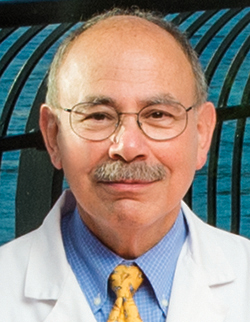
Dr. Joseph Lane is Chief of the Metabolic Bone Disease Service at HSS and specializes in fractures, bone tumors, and metabolic bone diseases including osteoporosis and other bone disorders.
Born in New York City and raised in Great Neck, Long Island, Dr. Lane received his undergraduate degree (Magna Cum Laude) from Columbia College and his medical degree from Harvard Medical School. His general surgical internship and residency were performed at Hospital of the University of Pennsylvania. Dr. Lane performed bone collagen research at the NIDR at NIH (USPHS) from 1967-69 in Bethesda, Maryland, under Karl Piez and Edward Miller. He had a collagen research fellowship under Darwin Prochop at the CCRC University of Pennsylvania and a three-year orthopedic residency at the Hospital of the University of Pennsylvania during which time he was awarded the Kappa Delta Award (AAOS) for inhibiting scar formation.
Dr. Lane was the Elsee Butz Assistant Professor (orthopedics) at the Hospital University of Pennsylvania and Children’s Hospital of Philadelphia (1973-75). He was appointed Assistant Professor and Chief of the Metabolic Bone Disease Service at Hospital for Special Surgery/Cornell Medical School in 1975, ultimately attaining full Professorship, Assistant Dean, Director of Clinical Research, and Medical Director of the Metabolic Bone Disease Service and Osteoporosis Prevention (1976-93, 96-present). He was appointed Chief of the Bone Tumor Service (osteogenic sarcoma, Ewing’s sarcoma) at Memorial Sloan Kettering Cancer Center (1976-91) and Senior Attending (1991-93). From 1993-96 he was Professor and Chairman of the Department of Orthopaedic Surgery at UCLA. He is currently the Associate Director of the Orthopaedic Trauma Service at NewYork-Presbyterian Hospital.
Dr. Lane has published extensively on bone biology, tissue injury and repair, trauma, bone and soft tissue sarcomas (including osteogenic sarcoma and Ewing’s sarcoma), limb preservation, functional amputations, limb regeneration, and metabolic bone diseases (osteoporosis, Paget’s disease, rickets, osteomalacia, fibrous dysplasia).
He has served on numerous committees for the AAOS, including the Board of Directors and Chairman of COMSS, the Chairman Oversight Panel on Women’s Health Issues. He was President of the Orthopaedic Research Society, Musculoskeletal Tumor Society, Chairman of NIH Orthopaedic Study Section, OREF grants review board, ABOS Question Writing Task Force. He is a member of the AAOS, AOA, ABJS, ASBMR, ORS, MSTS, and OTA. He has earned NIH career and R01 grants, OREF grants, and foundation awards. He has been a visiting professor at educational institutes and is on the editorial board of several peer journals.
Profile Video
Special Expertise
Malignant and benign bone tumors (osteoglenic, Ewing’s, and soft-tissue sarcomas)
Fractures, non-unions, and delayed healing
Metabolic bone disease (osteoporosis, Paget’s disease, rickets, osteomalacia, fibrous dysplasia, melorheostosis)
Geriatric vertebral compression fractures
Geriatric hip fractures
Patient ratings for Dr. Lane
Insurance
If your insurance is not listed, please call our office if you have questions regarding your insurance coverage. If you have out-of-network benefits, then your insurance may reimburse you for a portion of your office visit.
Credentials
Appointments
Attending Orthopedic Surgeon, Hospital for Special Surgery
Chief, Metabolic Bone Disease Service, Hospital for Special Surgery
Assistant Dean, Hospital for Special Surgery, Weill Cornell Medical College and affiliated hospitals, NYC
Professor of Orthopedic Surgery, Weill Cornell Medical College
Attending Orthopedic Surgeon, NewYork-Presbyterian Hospital
Adjunct Professor, Department of Orthopedic Surgery, Columbia University, College of Physicians & Surgeons
Chief, Metabolic Bone Disease Service
Certifications
National Board of Medical Examiners
American Board of Orthopaedic Surgeons, September 1974
Board Recertification—American Board of Orthopaedic Surgeons, July 1998
Awards
HSS Lifetime Achievement Award, 2011
Castle Connolly America's Top Doctors, 2003-2018
Castle Connolly Regional Top Doctor, 2012-2018
Castle Connolly Top Doctors in New York Metro Area, 2002-2018
FDA Orthopaedic Panel, 1999-2018
New York State Osteoporosis and Education Program (NYSOPEP), 1999
NIH Tissue Engineering Grant Review Panel, 1998-2018
NIH Sickle Cell Hip Program - Oversight Committee,1998-2018
Newsweek, 2015
Castle Connolly America's Top Doctors for Cancer, 2005-2014
New York Magazine Top Doctors, 2002-2009
New York Magazine Top Minimally Invasive Doctors, 2002
NIH Consensus on Total Hip Replacement - Panelist, 1994
Education
MD, Harvard Medical School, 1965
Residency: Hospital of the University of Pennsylvania, Department of General Surgery, Pennsylvania, 1966-67
Hospital of the University of Pennsylvania, Department of Orthopaedic Surgery, Pennsylvania, 1972-73
Fellowship: National Institute of Arthritis and Metabolic Disease, NIH (USPHS), Research Associate
General Clinical Research Center, Collagen Metabolism (Darwin Prochop), Research Associate
State Licensure
New York, Connecticut
Languages
EnglishFor My Patients
Publications by Dr. Lane
Patient Education
Selected Journal Articles
Research
Clinical Trials / Research Studies
Patient Registries
Dr. Lane is a principal investigator for these patient registries .
Industry Relationships
HSS has a long history of supporting appropriate relationships with industry because they advance HSS's mission to provide the highest quality patient care, improve patient mobility, and enhance the quality of life for all, and to advance the science of orthopedic surgery, rheumatology, and their related disciplines through research and education.
Below are the healthcare industry relationships reported by Dr. Lane as of July 1, 2025.
- Amgen, Inc. - Honoraria; Research Support
- BICMD, Inc. - Consultant
- Lenoss Medical - Consultant
- Merck - Research Support
- Mesentech - Consultant
- National Institutes of Health (NIH) - Consultant
- Radius - Consultant
HSS and its physicians make this information available to patients and the public, thus creating a transparent environment for those who are interested in this information. Further, the HSS Conflicts of Interest and Commitment Policy prohibits physicians from collecting royalties on products they develop that are used on patients at HSS. Patients should feel free to ask their HSS physicians questions about these relationships.