

- Loading news articles, please wait.
For all publications, please see the PubMed listing


Dr. Kyriakos A. Kirou, Attending Physician at Hospital for Special Surgery, is a physician-scientist in the field of academic rheumatology. He has a special interest in the research and treatment of systemic autoimmune rheumatic diseases, and especially systemic lupus erythematosus (SLE).
Systemic Lupus Erythematosus (SLE)
Lupus Nephritis
Lupus Clinical Trials
Lupus and Pregnancy
Anti-phospholipid Syndrome
Vasculitis
Rheumatoid Arthritis
Psoriatic Arthritis
Systemic Sclerosis (Scleroderma)
Inflammatory Myositis

Bronx, NY
Lupus

Brooklyn, NY
Hip Replacement

New York, NY
Lupus
If your insurance is not listed, please call our office if you have questions regarding your insurance coverage. If you have out-of-network benefits, then your insurance may reimburse you for a portion of your office visit.
Director, Lupus Nephritis Program, Hospital for Special Surgery
Clinical Co-Chief, Lupus Clinic, Hospital for Special Surgery
Attending Physician, Hospital for Special Surgery
Associate Scientist, Hospital for Special Surgery
Associate Attending Physician, New York-Presbyterian Hospital/Weill Cornell
Associate Clinical Member, Memorial Sloan-Kettering Cancer Center
Associate Professor of Clinical Medicine, Weill Cornell Medical College
American College of Rheumatology, Fellow
American College of Physicians, Fellow
Arthritis Foundation Member, Member
Hellenic Medical Society of New York, Member
New York Rheumatism Association, Member
National Psoriasis Foundation, Member
American Board of Internal Medicine, 1995, 2005, 2015
American Board of Rheumatology, 1998, 2008, 2018
Best Doctors in America, 2019
America's Best Physicians. Natl Consumer Advisory Board, 2017
HSS Division of Rheumatology Teaching Excellence Award, 2017
HSS Division of Rheumatology Teaching Excellence Award, 2007
ACR Annual Slide Competition, Third Place, 2006
NIAID/NIH Mentored Clinical Scientist Development Award (KO8), 2003
ACR/REF Global Arthritis Research Network Travel Grant, 2002
Merck 2000 Rheumatology Young Investigator, 2000
Extended Fellowship Grant Award (3 years), The SLE Foundation Inc., 1999
Fellowship Grant Award, Arthritis Foundation, New York Chapter, 1998
ACR/REF Travel Award, 1998
MD, Aristotle University of Thessaloniki, Greece
DSc, National University of Athens, Greece
New York, Connecticut, New Jersey, Florida
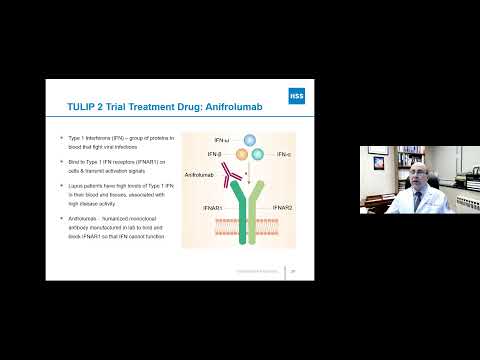
Dr. Kyriakos Kirou has been very active in the translational and clinical research of systemic lupus erythematosus (SLE). Our studies, along with those of others, have identified the important role of type I IFN in the pathogenesis of lupus, and have paved the way for better understanding of this disease and the development of new lupus therapeutic targets. We have been part of the Lupus Clinical Investigators Network (LuCIN) and the Lupus Nephritis Trials Network and actively participating in important clinical trials for lupus and lupus nephritis at HSS.
HSS has a long history of supporting appropriate relationships with industry because they advance HSS's mission to provide the highest quality patient care, improve patient mobility, and enhance the quality of life for all, and to advance the science of orthopedic surgery, rheumatology, and their related disciplines through research and education.
Below are the healthcare industry relationships reported by Dr. Kirou as of April 6, 2026.
HSS and its physicians make this information available to patients and the public, thus creating a transparent environment for those who are interested in this information. Further, the HSS Conflicts of Interest and Commitment Policy prohibits physicians from collecting royalties on products they develop that are used on patients at HSS. Patients should feel free to ask their HSS physicians questions about these relationships.